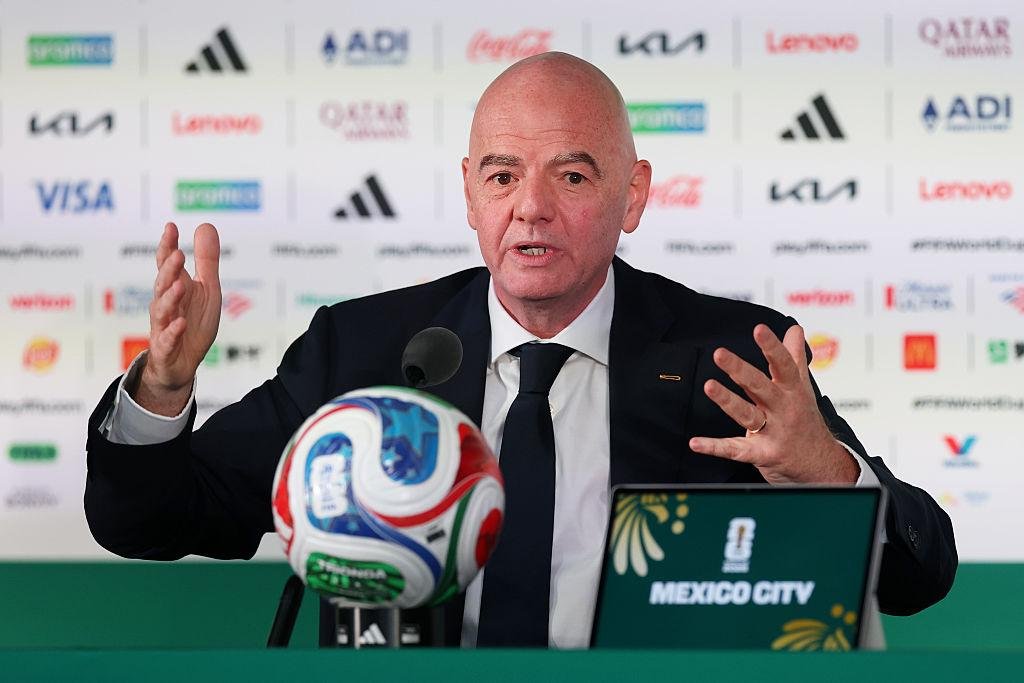

The governance crisis engulfing FIFA has escalated after New Zealand Football withdrew its support for President Gianni Infantino’s re-election, citing a loss of confidence following the collapse of a controversial plan to bring private investors into FIFA’s commercial operations.
The move adds to growing opposition inside world football over Infantino’s proposal to sell a 20% stake in the commercial rights to FIFA competitions to private investors in a deal intended to raise about $4.2 billion.
The plan has triggered criticism from some of the most powerful confederations in the sport, including UEFA, the Asian Football Confederation and CONCACAF. Together, those bodies represent 136 of FIFA’s 211 voting member associations. They have called for an independent review of how the proposal was developed and presented.
New Zealand pulls its support
New Zealand Football said it had withdrawn its backing for Infantino ahead of the next FIFA presidential election, arguing that recent events had undermined trust in the organization’s leadership.
The Oceania Football Confederation, while welcoming FIFA’s decision to abandon the investment proposal, also backed calls for an independent review.
The controversy has exposed a widening divide inside global football.
Several national federations and regional confederations have questioned both the substance of the proposal and the process through which it was developed, arguing that major stakeholders were not properly consulted before FIFA sought support for the plan.
A $4.2 billion proposal that triggered a backlash
Infantino’s plan envisaged bringing private capital into FIFA competitions by selling a minority commercial stake.
Supporters argued that the model could generate billions of dollars in new revenue and substantially increase the funding available to national football associations.
Critics, however, raised concerns about transparency, governance and the long-term consequences of allowing private investors to acquire a financial interest in the World Cup and other FIFA competitions.
FIFPRO Europe warned in July that turning major FIFA competitions into investment assets could fundamentally alter the incentives governing the sport and said a proposal of such significance had been developed largely behind closed doors without meaningful participation by players and other key stakeholders.
The Asian Football Confederation was equally critical. AFC President Sheikh Salman bin Ebrahim Al-Khalifa described FIFA’s lack of consultation over the plan as “totally unacceptable” and warned that unilateral decision-making risked undermining cooperation and transparency within international football.
FIFA subsequently withdrew the proposal.
Calls for deeper reform
The dispute has now expanded beyond the failed investment plan itself.
FIFPRO Europe President David Terrier said this week that FIFA faces a broader crisis of trust and requires structural reform rather than merely a debate over who should lead the organization.
Terrier argued that power has become too centralized and compared the current governance crisis with the period of turmoil that ultimately led to the departure of former FIFA president Sepp Blatter in 2015.
He said restoring confidence would require greater transparency and a redistribution of power within football’s governing structures.
UEFA Vice-President Laura McAllister has also called for the next FIFA president to act as a “custodian of the sport,” arguing that global football should not be dominated by individual power or purely commercial interests.
Infantino still retains significant support
Despite the mounting criticism, Infantino is far from politically isolated.
Six Arab national football associations — including Qatar, Egypt and Morocco — publicly backed him this week, praising his record on football development.
The Confederation of African Football has also continued to support his leadership.
Malawi Football Association president Fleetwood Haiya told Reuters that FIFA investment under Infantino had made a tangible difference to football development in Africa and credited that support with helping Malawi reach the 2027 Women’s World Cup.
Haiya said he would continue to back Infantino unless another candidate presented a more convincing plan for developing football in less wealthy nations.
The emerging split therefore does not fall neatly along continental lines.
While UEFA, AFC and CONCACAF have been among the strongest critics of the failed commercial proposal, support for Infantino remains substantial in Africa, parts of the Middle East and among smaller associations that have benefited heavily from FIFA development funding.
Money, influence and the smaller federations
The controversy has also renewed scrutiny of FIFA’s development funding system.
Former Papua New Guinea international Alex Davani has argued that smaller national associations can become heavily dependent on FIFA funding, making them reluctant to challenge the organization’s leadership.
In many smaller football nations, FIFA development grants represent a major share of the resources available to national federations.
That dependence has fueled a broader debate over whether FIFA’s financial model creates an imbalance between the formal equality of its 211 member associations and their practical ability to oppose the leadership that controls access to development resources.
A test ahead of the next FIFA election
The dispute now carries direct consequences for Infantino’s political future.
FIFA’s next Congress will determine whether he secures another term as president.
New Zealand’s withdrawal of support is significant not because one vote alone can decide the election, but because it demonstrates that the backlash has moved beyond public criticism and into FIFA’s actual voting structure.
At the same time, the support declared by Arab and African associations shows that Infantino retains a powerful electoral base.
The crisis therefore presents two competing visions of FIFA.
One emphasizes private investment, centralized commercial expansion and the redistribution of revenues to national associations.
The other argues that FIFA’s growing financial power must be matched by stronger transparency, wider consultation and more independent governance.
The failed investment proposal may have been withdrawn, but the dispute it triggered is no longer about a single commercial plan.
It has become a battle over who controls global football — and how much power FIFA’s president should be allowed to exercise over the world’s most valuable sport.