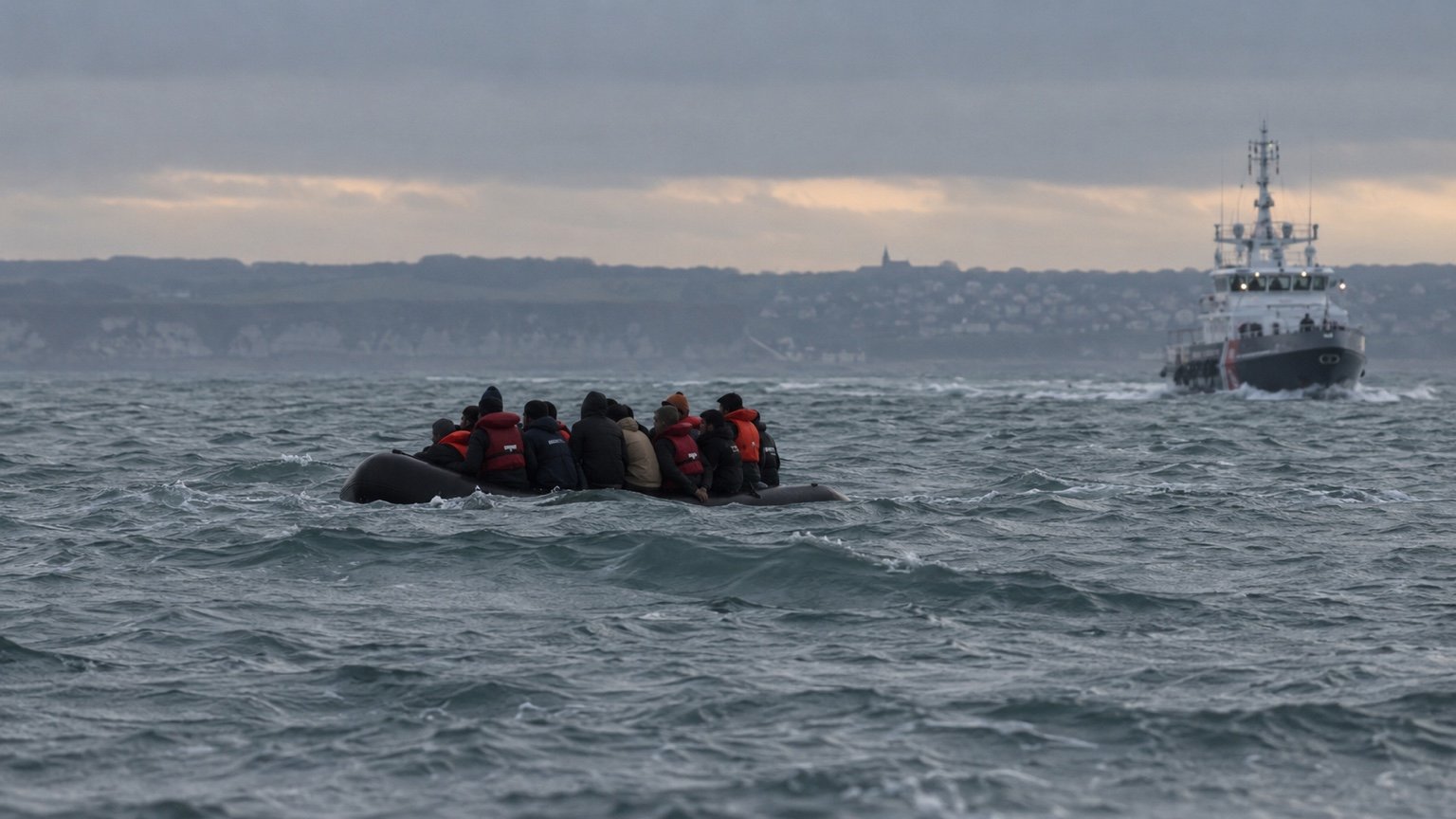

Fourteen men have gone on trial in Paris over their alleged roles in the smuggling network behind the November 2021 English Channel disaster in which more than 30 migrants died while attempting to reach Britain from France.
The case, which opened on September 8 and is scheduled to run until September 30, revisits the deadliest known migrant crossing disaster in the Channel and places renewed scrutiny on both the trafficking networks that organised the journey and the failures in the French-British rescue response that followed distress calls from the boat.
Fourteen defendants face trial
According to Reuters, the defendants are accused of involvement in Afghan and Iraqi-Kurdish smuggling networks that arranged the crossing.
The charges include involuntary manslaughter, human trafficking as part of an organised gang and criminal conspiracy. Two of the defendants are being tried in absentia.
Lawyers for some of the accused have argued that their clients played only minor roles, while others have pointed to the absence from the courtroom of figures alleged to have occupied more senior positions in the smuggling operation.
The proceedings remain ongoing, and the charges have not been proven.
A boat carrying at least 33 people
During the night of November 23–24, 2021, a small inflatable boat carrying migrants from France towards the United Kingdom became flooded and partially sank in the Dover Strait.
Britain’s Marine Accident Investigation Branch later concluded that the craft was unsuitable for the crossing, poorly equipped and carrying around 33 people.
Twenty-seven bodies were recovered. Four other people were never found, while two survived.
The victims included people from Iraq, Afghanistan and other countries. The youngest was a seven-year-old girl.
The 2026 Cranston Inquiry, established by the British government to examine the disaster, concluded that the loss of life was avoidable. It found that the smugglers had placed those on board at grave risk by providing an unsuitable vessel, inadequate safety equipment and overcrowding the boat.
Distress calls and missed opportunities
But the inquiry also identified serious shortcomings in the emergency response.
People aboard the boat made repeated calls for help as conditions deteriorated. The inquiry found that HM Coastguard personnel faced severe operational pressure, poor situational awareness and communication difficulties on the night of the disaster.
Incoming calls from the boat were missed, updated location information was not always obtained and language barriers complicated communication.
The report also found that a belief among some Coastguard personnel that migrants on small boats often exaggerated the level of danger contributed to later calls from the vessel being treated with less urgency.
The inquiry said this belief negatively affected the response to the boat, which was designated “Charlie” by UK authorities.
French vessel did not respond to Mayday relay
At 2:27 a.m., HM Coastguard issued a Mayday relay after concluding that the boat was in serious distress.
The closest government vessel was the French naval ship Flamant, operating on behalf of the French Coastguard. According to evidence reviewed by the Cranston Inquiry, it was approximately three nautical miles — around 15 minutes — from the distress position.
The Flamant did not respond to the Mayday relay.
The inquiry stressed that the reasons for the vessel’s failure to respond remain a matter for French authorities and that it could not determine the issue conclusively because relevant evidence formed part of a continuing French criminal investigation.
However, the inquiry concluded that if the Flamant had reached the boat while it was still intact, many more — and potentially all — of those on board could have survived.
The report also identified failures in cooperation between the British and French coastguards, including delays in the exchange of information and uncertainty over how the French vessel could be tasked.
UK response was also criticised
The inquiry did not place responsibility solely on the French side.
It found that HM Coastguard had failed to develop adequate procedures, training and systems for dealing with the rapidly increasing number of small-boat crossings by late 2021.
On the night of the disaster, the Dover rescue coordination centre was overwhelmed.
The absence of an aerial surveillance flight, poor visibility, incomplete information from France and confusion over the location and status of different migrant boats made the search more difficult.
But the inquiry found that operational errors also mattered. Staff eventually believed the emergency involving “Charlie” had been resolved, even though the people aboard had entered the water and some may still have been alive for hours.
Expert evidence submitted to the inquiry indicated that some victims were likely alive until around 7 a.m., and a smaller number may have survived until later in the morning.
Government accepted most operational recommendations
The Cranston Inquiry published its final report in February 2026 and issued 18 recommendations.
In July, the British government said it had accepted all 15 operational recommendations addressed in its interim response.
Officials said search-and-rescue operations in the Channel had changed substantially since 2021, with closer cooperation with France, additional personnel and assets, and increased use of technology. Three broader policy recommendations remained under separate consideration at that stage.
Trial focuses on the alleged smuggling network
The Paris proceedings address a different question from the official inquiries into the rescue operation.
French prosecutors are seeking to establish the individual criminal responsibility of the defendants accused of helping organise the fatal crossing.
The case is therefore unfolding on two parallel tracks: one examining the alleged smuggling network that put migrants aboard an unsafe vessel, and another documenting the institutional failures that affected the attempt to rescue them.
Families of those who died are expected to testify during the trial.
For them, the proceedings come nearly five years after the disaster — and after official investigations concluded that at least some of the deaths could have been prevented.