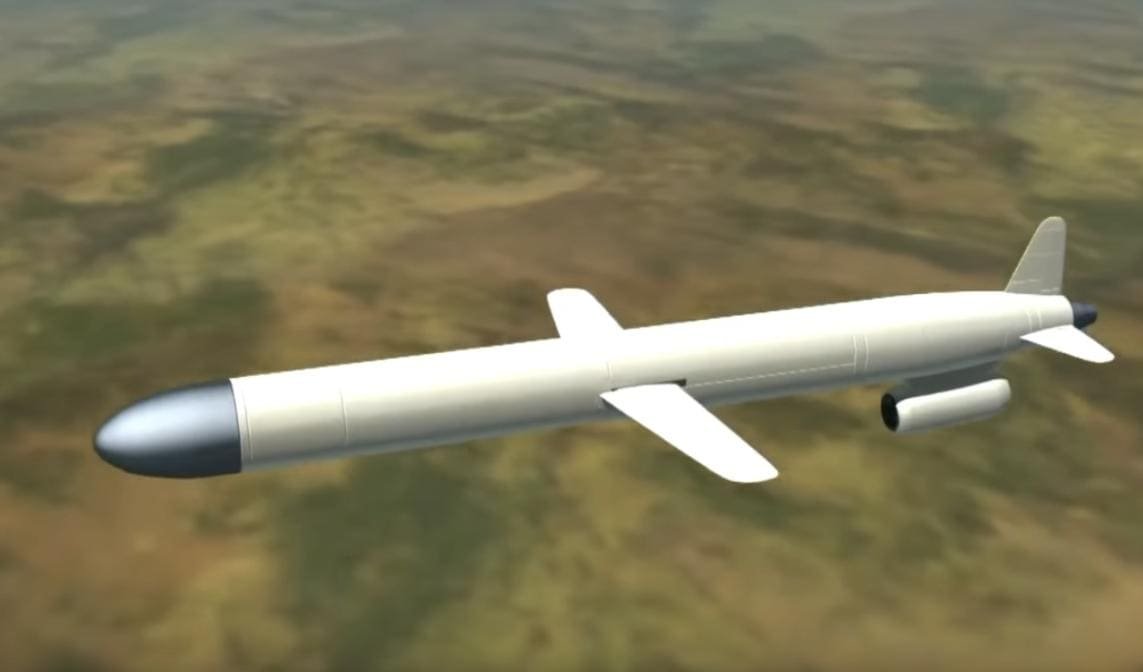

The night of July 30, 2026 will be remembered in Warsaw for a long time. As Russia carried out one of its largest missile strikes on Ukraine in recent memory, wreckage from a Kh-101 cruise missile was found on the territory of Poland — a NATO member state. This time it isn’t just a theory floated to the press but, in effect, an established fact: Polish Defense Minister Władysław Kosiniak-Kamysz has stated outright that the most likely scenario is that a Russian missile came down on Polish soil. Warsaw is already coordinating next steps with its allies in the Alliance.
What is known so far
According to General Ireneusz Nowak, Inspector of the Polish Air Force, Russia fired between 20 and 22 Kh-101 cruise missiles at Ukraine that night. Two of them were classified as posing a direct threat to Polish airspace. An F-16 was scrambled to track one of the targets — its crew recorded the moment the missile went down in an unpopulated area.
Polish media and the operational command of the armed forces report that radar picked up an unidentified object around 3:40–3:50 a.m. local time, moving westward. One object came within roughly 5 kilometers of the border before changing course; the other briefly entered Polish airspace. The wreckage was found in an unpopulated part of the Lublin Voivodeship, near the village of Tarnawa-Kolonia. No casualties or damage have been reported. Kosiniak-Kamysz called it an exceptionally difficult night for air defense, surveillance, and threat-detection systems, adding that the investigation is ongoing to precisely identify the object.
There’s also a symbolic coincidence that has added political weight to the story. Prime Minister Donald Tusk noted that the incident happened just hours after his meeting with Ukrainian President Volodymyr Zelensky in Lublin — a city roughly 50 kilometers from where the missile came down. According to Tusk, Zelensky had warned him in advance about a large-scale Russian missile strike that was being prepared. Sources say the meeting covered the outcomes of Zelensky’s visit to Washington, cooperation on missile defense, and the safety of Ukrainian refugees in Poland.
Why this is causing particular alarm at NATO
Previous incidents involved drones. This time, a full long-range cruise missile entered Polish airspace — a fundamentally different level of threat. That’s precisely why analysts expect the Alliance’s response to go beyond a routine protest.
The incident lands on top of a string of episodes NATO can no longer brush aside:
- in November 2022, a missile — believed to be of Ukrainian origin — struck the Polish village of Przewodów, killing two people; that incident prompted NATO’s first-ever emergency consultations under Article 4 of the North Atlantic Treaty;
- in September 2025, around 19 Russian drones violated Polish airspace in succession, seen as a test of the Alliance’s response system, which also triggered Article 4 consultations;
- the current incident is the third serious episode in under four years, and the first time since 2022 that wreckage of an actual strike missile — rather than air-defense debris or a reconnaissance drone — has been found on NATO territory.
Article 4 gives any member state the right to request urgent consultations if it believes the territorial integrity, political independence, or security of an ally is under threat. Formally, this doesn’t trigger automatic military obligations the way Article 5’s collective-defense clause does — but Article 4 consultations are usually the first real indicator of how seriously the Alliance is taking a situation. Analysts familiar with the procedure say it’s quite likely Poland will invoke this mechanism within the next few hours or days.
What will now be scrutinized
For military experts, this incident is a practical stress test of several parts of Eastern Europe’s defense architecture:
- whether the early-warning and radar-monitoring system worked in time — sirens sounded in Lublin before the object came down, which itself suggests a certain level of readiness;
- why the scrambled F-16 was only able to track and record the missile’s fall rather than intercept it — a question of rules of engagement and decision-making speed;
- how quickly and effectively Poland informed its allies, and whether that happened before or after public statements were made;
- how the incident fits with the already-discussed plans for a unified Eastern European air-defense system, a topic that’s gained momentum since September’s drone incident.
The experience of 2022 is a lesson in caution: initial claims that the missile was “of Russian origin” back then had to be corrected, and the Alliance — under then-Secretary General Jens Stoltenberg — pointedly waited for the investigation’s conclusions before assigning responsibility. This time, though, the picture looks more clear-cut: the wreckage has been identified as belonging specifically to a Kh-101 — a weapon Russia routinely uses to strike Ukrainian territory, not a component of Ukraine’s own air-defense systems. Still, Polish authorities are for now describing this as the “most likely version” rather than a conclusively established fact, and the official investigation continues.
Warsaw and Kyiv against a backdrop of cooling relations
The incident comes at a difficult moment in Polish-Ukrainian relations. Zelensky’s visit to Lublin was his first trip to Polish territory since a diplomatic chill set in, triggered by Kyiv’s decision to name a military unit after the Ukrainian Insurgent Army — a move that provoked a sharp reaction in Warsaw, including the stripping of a Polish honorary order from Zelensky. At the same time, Polish law enforcement has recorded a rise in incidents of hostility toward Ukrainian refugees, and Polish public sentiment on further support for Kyiv has grown more reserved.
Against that backdrop, a Russian missile coming down on Polish soil just hours after Tusk and Zelensky discussed missile defense cuts both ways. On one hand, it bolsters the case made by political forces in Warsaw who are pushing for faster buildup of Poland’s own defense capacity rather than a continued focus on supporting Ukraine. On the other, it gives Kyiv an additional argument for its position that defending Ukrainian skies is, in effect, defending NATO territory.
What comes next
In the coming hours and days, expect several parallel developments: the completion of a technical examination of the missile wreckage, a possible Polish request for Article 4 consultations, statements from NATO headquarters in Brussels, and reactions from individual Alliance members — above all the Baltic states and Romania, for whom this incident will become another argument for speeding up the integration of Eastern Europe’s air-defense systems.
The central question now facing the Alliance is blunter than it was after the drone incidents: if a long-range strike missile can reach NATO territory, and interception amounts to little more than tracking its fall rather than stopping it, how realistic are the current timelines for the “integrated Eastern European air-defense system” that Brussels and European capitals have been discussing for nearly a year — without turning it into concrete, binding commitments?
Based on reporting from The Guardian and Polish official sources.