
A European Union agency has taken three major technology contractors to court over delays in developing the Schengen Area’s digital border system, whose contract value increased from €142 million to €212 million. The legal dispute, disclosed publicly on November 9, comes as airports warn that biometric border checks are still causing severe delays for some passengers.
November 9, 2026
The European Union is pursuing legal action against IBM, Atos and Leonardo over delays in delivering the Entry/Exit System (EES), a digital border-control platform used to register millions of non-EU travellers entering and leaving the Schengen Area.
The case was filed in Estonia on December 22, 2025, by eu-LISA, the EU agency responsible for operating large-scale information systems in the fields of migration, border management and security. Its existence was brought to wider public attention on Monday following reporting by the Financial Times, based on agency accounts and internal correspondence.
The lawsuit concerns a major technology contract awarded in 2019 to a consortium comprising IBM Belgium, Atos Belgium and Italy’s Leonardo.
The system was originally scheduled to become operational in 2022. Instead, its phased introduction began in October 2025, with full deployment completed on April 10, 2026.
The dispute raises two important but separate questions: whether the EU can recover losses associated with delayed public infrastructure, and whether the technology now operating at Europe’s borders is delivering the efficient passenger processing it was designed to provide.
For travellers, the immediate concern is not the lawsuit itself, but the additional time required for biometric registration and border checks at some airports.
How a €142 million contract became a €212 million project
In 2019, eu-LISA awarded the consortium a six-year contract covering development, implementation and maintenance of the central Entry/Exit System.
According to the Financial Times, the contract’s value increased from €142 million to €212 million in 2021 — a rise of approximately €70 million, or 49%.
That increase occurred years before the lawsuit and should not be confused with damages being sought in the proceedings.
The reported €212 million figure also refers to the consortium’s contract, not necessarily the total cost of the EES programme across all participating countries, including national infrastructure, border equipment and staffing.
The Financial Times reported that delays had wider budgetary implications for eu-LISA. The agency’s EES budget allocation for 2023 was increased to approximately €40 million as the project encountered further difficulties.
Questions surrounding the programme therefore extend beyond the original contract. They include the cost of prolonged development, changes to implementation plans and the financial consequences for other EU technology priorities.
However, a rise in contract value does not itself establish fraud, unlawful spending or contractor misconduct.
Determining responsibility requires examination of the relevant contractual amendments, delivery obligations and the circumstances of the delays.
What triggered the lawsuit?
The disagreement between eu-LISA and the contractors began well before the system entered operation.
Internal correspondence examined by the Financial Times shows that IBM Belgium and Atos Belgium challenged a financial penalty imposed by eu-LISA in October 2021.
The companies disputed both the basis of the penalty and how it had been calculated, citing circumstances beyond their control, including the COVID-19 pandemic.
In February 2022, all three companies also contested revised deadlines imposed by the agency and raised concerns about aspects of the project’s management.
The dispute eventually resulted in legal action.
According to reporting by the Financial Times and The Guardian, eu-LISA filed its claim before an Estonian court on December 22, 2025, seeking to protect the agency’s financial interests.
The Estonian court confirmed the existence of the proceedings. As of November 9, no public judgment establishing the contractors’ liability had been reported.
IBM, Atos and Leonardo had not provided substantive responses to initial media requests for comment when the news emerged.
The European Commission has clarified that it is not a party to the case. Eu-LISA has also stressed that the litigation concerns the system’s historical development and delivery, not its current operation.
The legal proceedings therefore do not suspend the EES or invalidate border checks carried out through it.
Why are travellers still facing long queues?
The EES was introduced to replace traditional passport stamping with digital records of entries and exits, supported by biometric identification.
It records passport information, facial images and, where required, fingerprints for eligible non-EU nationals travelling to participating European countries for short stays.
The intention is to improve border security, identify overstayers and detect identity fraud while eventually making repeated border crossings more efficient.
But implementation has presented practical challenges.
On October 12, 2026, Airports Council International Europe (ACI EUROPE) and Airlines for Europe (A4E) warned that border-control waiting times remained excessive at some European airports.
The two organisations said waits were still regularly exceeding two hours in affected locations and had reached up to five hours during the most extreme peak-traffic periods.
The industry groups called for urgent changes to address operational and regulatory problems affecting the system.
Airports have reported difficulties involving biometric equipment, automated kiosks, technical interruptions and insufficient processing capacity during busy periods.
Some passengers have reportedly missed flights after extended waits at border control.
However, these incidents do not mean that every European airport is experiencing similar disruption.
Nor has a direct causal relationship been established between the contractual delays at issue in the lawsuit and specific operational problems encountered by passengers in 2026.
What does the official aviation data show?
A separate analysis by EUROCONTROL, published on October 30, provides a more measured picture of the system’s effects on aviation.
The organisation examined departure delays attributed to immigration, customs and health procedures during the summer of 2026, comparing them with the same period in 2025.
Its findings showed limited overall effects on the European aviation network, with the impact generally decreasing as the summer progressed.
However, the picture differed considerably between countries, airports and times of day.
Flights departing for destinations outside the Schengen Area were more affected than flights within it, while some of the greatest differences appeared during morning operations.
The analysis also noted that local conditions and other operational factors could influence delays.
There is no contradiction between this finding and reports of severe passenger queues.
An airport may experience lengthy passport-control waits without creating widespread delays across Europe’s flight network. Travellers at individual border crossings can therefore encounter serious disruption even when aggregate aviation statistics show relatively limited effects.
The available evidence supports a narrower conclusion than claims of continent-wide airport paralysis: EES disruption has been significant at certain locations and times, but its consequences are uneven.
Who is affected by the new border system?
The EES applies primarily to non-EU nationals entering participating European countries for short stays, generally limited to 90 days within any 180-day period.
It covers both travellers who need short-stay visas and eligible visitors who can enter without a visa.
This includes many British, American, Canadian and other non-EU travellers visiting Europe for tourism, business or family reasons.
The system operates at the external borders of 29 participating European countries, including 25 EU members and the four associated Schengen countries: Iceland, Liechtenstein, Norway and Switzerland.
It does not apply to all foreign passport holders.
EU citizens and nationals of Iceland, Liechtenstein, Norway and Switzerland are exempt.
Non-EU nationals holding qualifying residence permits or long-stay visas issued by countries operating the EES are also generally exempt.
Certain family members of EU citizens and other eligible categories are excluded under specific conditions.
An important distinction concerns documents issued by Ireland and Cyprus: holders of residence permits or long-stay visas from those countries are not automatically exempt from EES registration under the same rules.
Travellers should verify their status using the European Commission’s official guidance rather than relying on nationality alone.
What happens during an EES border check?
For travellers subject to the system, border authorities digitally register information that was previously recorded through passport stamps.
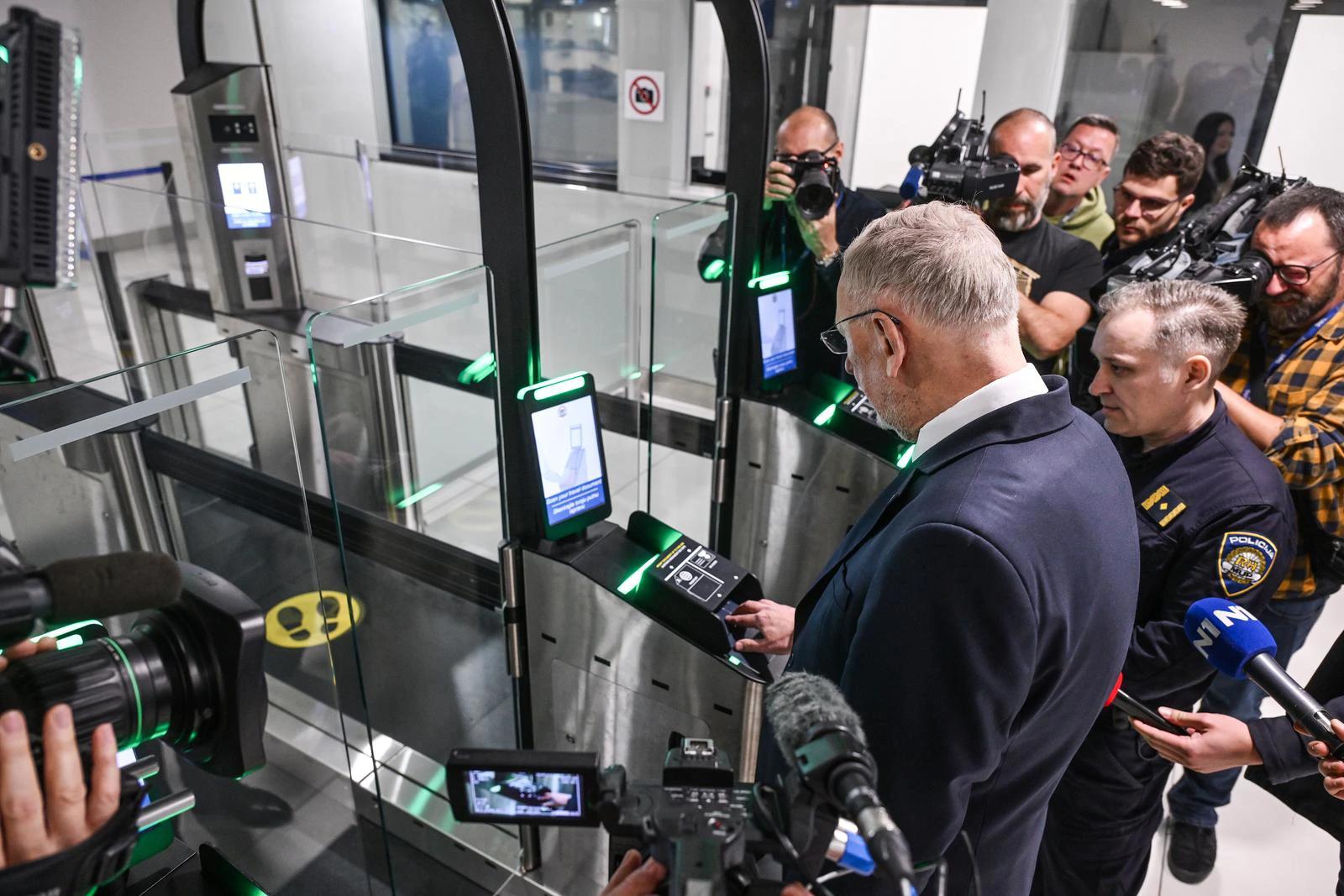
At first registration, the process generally includes checking the travel document and collecting the required biometric information, such as a facial image and fingerprints.
At later crossings, the traveller’s identity can be checked against the existing digital record, potentially reducing the time needed for repeat registration.
The EES also automatically records the dates and places of entry and exit and helps authorities determine whether a traveller has exceeded the permitted duration of a short stay.
The system became fully operational on April 10, 2026, following a six-month phased introduction.
Since that date, electronic records have replaced routine passport stamping for travellers covered by EES.
The new system does not change the underlying 90-days-in-180-days rule or the other legal conditions for entry.
EES is also separate from ETIAS, the EU’s planned travel-authorisation system for eligible visa-exempt visitors.
What should passengers do before travelling?
The lawsuit creates no new obligations for passengers, but the reported operational difficulties make advance preparation particularly important.
Travellers should check whether EES applies to their personal circumstances, including their residence status and the documents they hold.
Those who must complete biometric registration should allow sufficient time for border formalities, particularly when connecting between flights that require crossing an external Schengen border.
Airline and airport guidance should be checked before departure because processing times vary considerably by location and passenger volume.
Travellers should keep their passports, visas and residence documents readily available for inspection and use official European Union information to understand the registration process.
Where approved self-service options are available, they may simplify some stages of registration, although additional checks by border officers can still be required.
EES registration is not a separate visa and does not replace the right or permission required to enter the destination country.
Passengers should also be cautious of unofficial websites offering paid EES registration services.
For someone already eligible to travel, the main practical consequence may be additional processing time — not a change in immigration status.
Does the lawsuit mean the EES is unsafe or defective?
No such conclusion has been established.
Eu-LISA maintains that the legal dispute concerns delays during development and has no effect on the system’s current functioning.
The European Commission has taken the same position regarding the separation between the litigation and present-day operations.
A functioning system can still experience technical problems or create operational bottlenecks. Equally, problems at individual border crossings do not, by themselves, demonstrate that the central system is legally or technically defective.
The outstanding court case concerns obligations under a development contract. The passenger experience depends on a much broader set of factors, including central infrastructure, national border systems, local equipment, staffing and operational procedures.
Assigning responsibility for particular disruptions would require evidence identifying their causes.
That distinction matters both for assessing the companies’ legal exposure and for understanding what corrective measures would actually improve passenger processing.
What is at stake for European taxpayers?
The litigation creates a test of accountability in large European technology projects.
Eu-LISA is responsible for systems that support border management, immigration, law enforcement and judicial cooperation across multiple countries.
When major infrastructure programmes are delayed, the costs can extend beyond the immediate contract.
Public authorities may face additional administrative expenses, prolonged reliance on existing systems, changes to national implementation schedules and the diversion of resources from other projects.
The EES experience is particularly significant because it forms part of a wider effort to connect European information systems and strengthen cooperation between national authorities.
The court proceedings may clarify whether deadlines and financial penalties were enforceable, whether delays were excusable and what remedies, if any, are available to eu-LISA.
The precise financial outcome remains uncertain.
It would be premature to assume that the agency will recover the full increase in contract value or that any of the contractors will be ordered to pay a particular amount.
Those questions depend on the contractual terms, evidence and eventual judicial decisions.
A border system under two different tests
The dispute places the EES under two forms of scrutiny.
The first is legal and financial: whether eu-LISA can establish responsibility for delayed delivery and recover any losses arising from the contract.
The second is operational: whether Europe’s digital border controls can process large volumes of travellers reliably without disproportionate waiting times.
Both questions matter, but they require different evidence and different solutions.
The Financial Times investigation has brought renewed attention to the contractual history, while airport and airline organisations continue to press for improvements affecting passengers.
EUROCONTROL’s findings indicate that operational problems vary substantially, suggesting that targeted improvements may be more effective than treating every airport as part of the same crisis.
For European taxpayers, the unresolved question is who should bear the financial consequences of a delayed public technology contract. For travellers, the immediate test is simpler: whether the system can deliver secure border checks without hours of avoidable waiting.
The Estonian court proceedings may eventually provide answers to the first question. The performance of Europe’s airports and border authorities will determine the answer to the second.
Sources and further reading
Legal proceedings and contract history
- Financial Times — EU sues IBM and partners over troubled border system, November 9, 2026
- Reuters — EU sues IBM and two European companies, November 9, 2026
- The Guardian — EU sues three contractors over EES delays, November 9, 2026
Official EES information and operational evidence